Sharing Our Fen
Imagine our surprise when we discovered that in the back 11 acres a severely-degraded fen was still showing signs of life! Since Sharing Our Roots began stewarding the land, we immediately stopped conventional practices of mono-cropping, spraying chemicals, and suppressing native plant life. As a result, native species began to repopulate the wetland and our Natural Lands manager, Nic Nelson, now has an incredible opportunity to lead the restoration of this rare ecosystem.
Inside a Fen Ecosystem
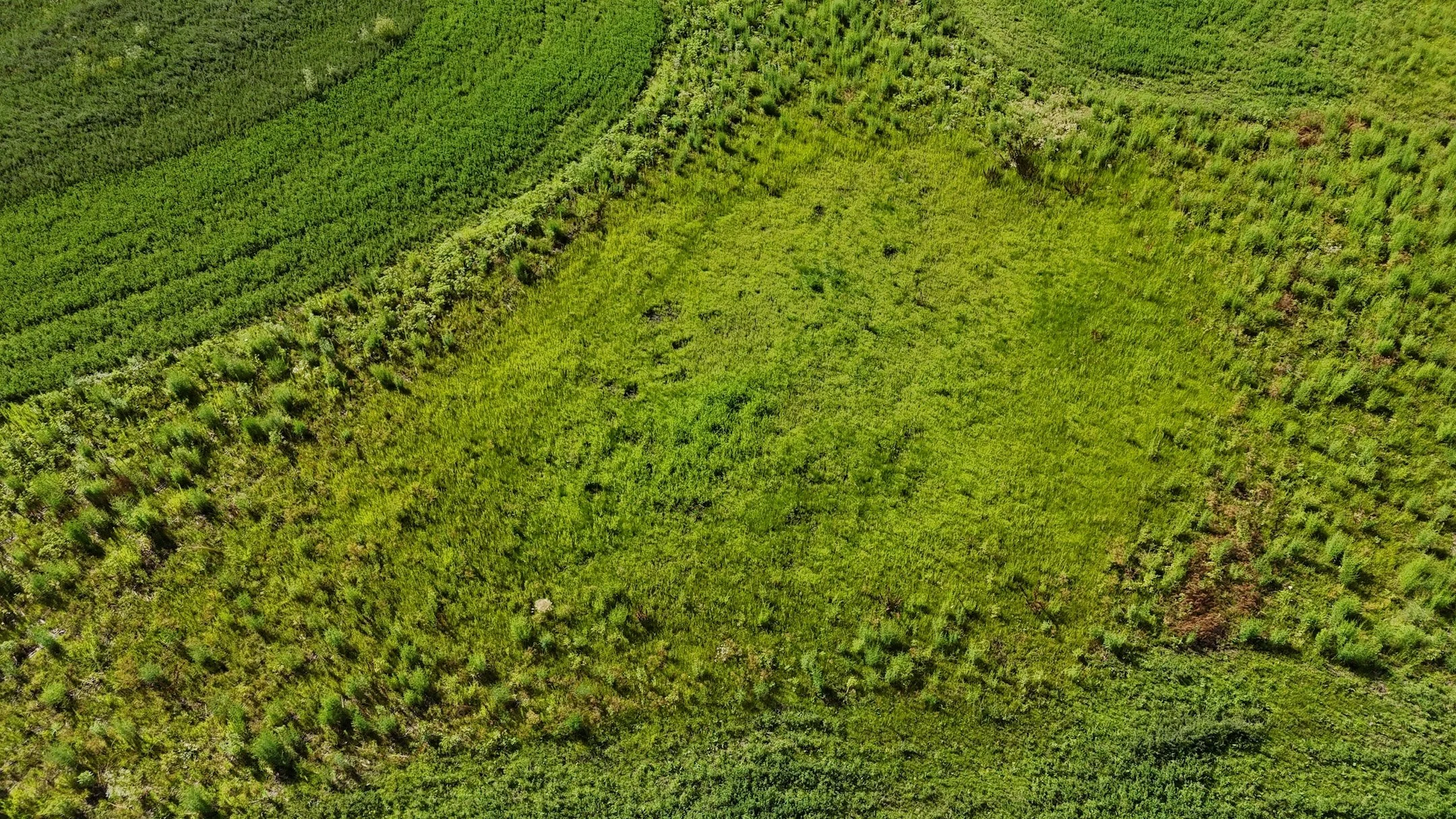
Calcareous fen located in the back 11 acres at the Sharing Our Roots Farm
A calcareous fen is a distinctive peat-accumulating wetland formed after the glaciers receded. Peat is partially decayed organic matter, important for carbon storage and soil water retention. This rare ecosystem relies on a constant upwelling of groundwater rich in calcium carbonate (tufa) to keep the peat saturated; due to this waterlogging, the soil is low in both oxygen and nutrient conditions. Such fragile and rare conditions give way to the excitement of discovering an old fen and restoring biodiversity in such an invaluable part of Minnesota’s natural landscape.
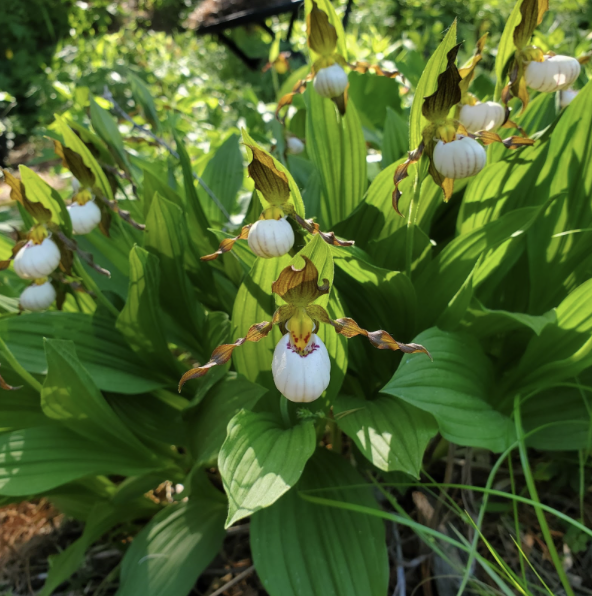
Cypripedium candidum, Small white lady’s slipper
Restoring a calcareous fen is important because they are rare ecosystems that support diverse plant communities. Many endangered and threatened plant species, such as small white lady’s slipper, sterile sedge, beaked spikerush, whorled nutrush, and hairy fimbry, can be found in these wetlands. Fen species are not only rare, but very fragile. Likewise, the unique hydrology of fens is also delicate and important. The filtration and regulation of water flow in a fen stabilizes water levels and reduces nutrient runoff which helps clean our waterways and wetlands. The long-term health and survival of fens is therefore crucial to the conservation of one of the rarest natural communities and waterway rehabilitation.
Where Renewal Begins
Extremely vulnerable to environmental degradation, once a fen is destroyed it cannot be replaced. Due to the softness of the peat, a fen is very delicate to any disturbances to the soil and water supply. In a similar vein, flooding, pollution, or invasive species could lead to the complete loss of fen species. There are many threats to the calcareous fen system that makes restoration vital to its survival.
The fen on our farm was close to being completely eradicated. In order to restore it to its former glory, we will need to regenerate the peat and repair the hydrology. Our fen has the correct geography so placing fen species strategically will encourage the return of the native plant community. That being said, managing the native plants will be an ongoing endeavor. Since most qualifying fen species are protected or endangered, we will need permission from the DNR to collect seed. Fen species are also difficult to identify so this summer our Natural Lands team and community partners will need to verify seed species. In order to fix the water flow, we will likely need to break tile in the north 11 fen unit to remove any horizontal movement to allow the proper upwelling of groundwater. To remove the tile, we may need to disturb some of the spots that have started to regenerate. To do that in a safe manner, we would lift the vegetative sods, pull the tile, then place it back.
In order to accomplish this demanding project, Nic has been collaborating with many experts in hopes of restoring the old calcareous fen located on our farm. There has been a lot of enthusiasm from MN Department of Natural Resources (DNR) botanists, Commons Land Community Trust (CLCT), St. Olaf and Carleton colleges, and the MN Board of Water and Soil Resources (BWSR) that has led to increased funding, support, and interest in our restoration efforts.
We are so grateful for all our community partners because restoring a fen is a lot of hard work!
A Special Thanks To:
MN Board of Water and Soil Resources – Jason Beckler and Melissa Sjolund
MN Department of Natural Resources Botanists – Amanda Weise, Linnea Lopez, Megan Benage, Keylor Andrews, and Welby Smith
US Fish and Wildlife – Mike Malling
St. Olaf College – Alyssa Melby, Wes Braker, and Charles Umbanhower
Carleton College – Erica Zweifel, Nancy Braker, and Matt Elbert
Sharing Our Roots Interns – Alexander James, Aviva Sachs, Oslo Reich, Lillian Hughs, and Pilar Abele
As a 501(c)(3) nonprofit, Sharing Our Roots relies on community donations to fund our work restoring land and providing immigrant, BIPOC, and LGBTQ+ farmers with essential support. If you are able and inspired, please join us in our work to heal our lands and prepare emerging farmers by contributing a one-time or recurring donation. Thank you!
Sources
DNR. “Calcareous Fens.” Minnesota Department of Natural Resources, April 17, 2025. https://www.dnr.state.mn.us/wetlands/calcareous-fens.html.
Minnesota Department of Natural Resources 2025. Technical Criteria for Identifying Calcareous Fens in Minnesota. Ecological and Water Resources Division, Calcareous Fen Technical Team. Minnesota Department of Natural Resources. Saint Paul, MN.
Dickson, Dax , and Tory Christensen. “Mitigation Partners, Inc .” Mitigation Partners, Inc (MPI), 30 May 2022, www.mitigationpartnersinc.com/resources/calcareous-fens.